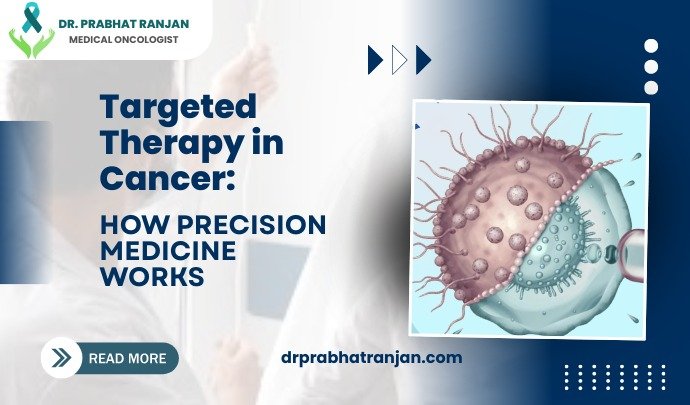
Targeted Therapy in Cancer: How Precision Medicine Works
Cancer treatment has evolved significantly over the past few decades. Earlier, treatment options such as chemotherapy and radiation were designed to attack rapidly dividing cells, often affecting both cancerous and healthy tissues. Today, advances in medical science have introduced targeted therapy, a form of precision medicine that focuses specifically on the unique characteristics of cancer cells.
At Dr Prabhat Ranjan’s practice, modern cancer treatment approaches are tailored according to each patient’s cancer type, genetic profile, and overall health. This precision-based strategy is increasingly adopted in leading centers, including those associated with the best medical oncologist in Greater Noida, where both adult and pediatric oncology care benefit from advanced therapies.
What Is Targeted Therapy?
Targeted therapy is a cancer treatment that works by identifying and attacking specific genes, proteins, or molecular pathways that help cancer cells grow and survive. Unlike traditional chemotherapy, which affects many cells in the body, targeted therapy aims to:
- Block signals that promote cancer growth
- Prevent blood supply to tumors
- Trigger cancer cell death
- Enhance the immune system’s ability to fight cancer
This focused approach reduces damage to healthy cells and often results in fewer side effects.
How Precision Medicine Works
Precision medicine begins with understanding the molecular makeup of a tumor. Each cancer has a unique genetic signature. Through advanced testing, doctors can identify specific mutations or abnormal proteins driving the cancer.
Step 1: Molecular Testing
Tumor samples are tested for genetic changes or biomarkers.
Step 2: Identifying Targets
Specific abnormalities, such as HER2 in breast cancer or EGFR mutations in lung cancer, are identified.
Step 3: Choosing Targeted Drugs
Medications are selected to block these specific targets, stopping cancer growth more effectively.
This approach is increasingly used in advanced oncology centers and facilities connected with the best medical oncologist in Greater Noida, particularly for complex or pediatric cancers.
Types of Targeted Therapy
These laboratory-made antibodies attach to specific proteins on cancer cells, blocking their growth.
2. Small Molecule Inhibitors
These drugs enter cancer cells and block internal signals that promote growth.
These prevent tumors from forming new blood vessels, limiting their growth.
4. Immunotherapy-Based Targeted Treatments
These boost the body’s immune response specifically against cancer cells.
Advanced treatment protocols followed by specialists like Dr Prabhat Ranjan align with global standards practiced at the best medical oncologist in Greater Noida.
Benefits of Targeted Therapy
Targeted therapy offers several advantages:
- Greater precision in attacking cancer cells
- Reduced harm to healthy tissues
- Improved treatment outcomes
- Fewer severe side effects compared to traditional chemotherapy
- Personalized treatment plans
For pediatric cancers treated at institutions such as the best medical oncologist in Greater Noida, targeted therapy can significantly improve survival rates while minimizing long-term complications.
Is Targeted Therapy Suitable for Everyone?
Not all cancers have identifiable molecular targets. Some patients may require:
- Combination therapy (targeted therapy + chemotherapy)
- Radiation
- Surgery
Comprehensive evaluation by an experienced oncologist ensures the most appropriate treatment strategy. Advanced diagnostic protocols similar to those used at the best medical oncologist in Greater Noida help determine eligibility for targeted therapy.
Side Effects of Targeted Therapy
Although generally better tolerated than chemotherapy, targeted therapy may still cause:
- Skin rashes
- Fatigue
- Diarrhea
- High blood pressure
- Liver function changes
Regular monitoring is essential to manage these effects effectively.
Targeted Therapy in Pediatric Cancer
Childhood cancers often have distinct genetic drivers. Precision medicine plays a crucial role in:
- Leukemia
- Brain tumors
- Neuroblastoma
- Certain rare cancers
Pediatric oncology units at the best medical oncologist in Greater Noida increasingly rely on molecular testing to guide treatment decisions and improve outcomes.
The Future of Precision Medicine
The future of cancer care lies in:
- Advanced genomic sequencing
- Personalized immunotherapies
- Biomarker-driven clinical trials
- Artificial intelligence in treatment planning
As research continues, more cancers are becoming treatable through targeted strategies, offering renewed hope to patients and families.
When Should You Consider Targeted Therapy?
You should discuss targeted therapy with an oncologist if:
- Your cancer has specific genetic mutations
- Standard treatments are not effective
- You are seeking personalized treatment options
- You have a recurrent or advanced-stage cancer
Early consultation and molecular testing can help determine suitability for this approach.
Conclusion
Targeted therapy represents a breakthrough in cancer treatment. By focusing on the specific molecular characteristics of cancer cells, precision medicine offers more effective and personalized care. While not every patient may qualify, those who do often experience better outcomes with fewer side effects. Under the expert guidance of Dr Prabhat Ranjan, and with treatment protocols aligned with institutions such as the best medical oncologist in Greater Noida, patients can access modern, evidence-based oncology care that prioritizes both effectiveness and quality of life.
FAQs
1. What is targeted therapy in cancer?
Targeted therapy is a treatment that attacks specific genetic changes or proteins in cancer cells.
2. How is targeted therapy different from chemotherapy?
It specifically targets cancer cells, causing less damage to healthy cells.
3. Is targeted therapy safe for children?
Yes, when appropriately selected and monitored, it is widely used in pediatric oncology, including at centers such as the best medical oncologist in Greater Noida.
4. Does every cancer patient qualify for targeted therapy?
No, eligibility depends on molecular testing and tumor characteristics.
5. What are the common side effects?
Mild skin issues, fatigue, and changes in blood pressure are common but manageable.
6. Can targeted therapy cure cancer?
In some cases, it significantly improves survival and may lead to remission.
7. Where can I get advanced cancer treatment?
Consult an experienced oncologist and specialized centers such as the best medical oncologist in Greater Noida for comprehensive care.


.png)

.png)
.png)

.png)
.png)
.png)

.png)
.png)
.png)
.png)
.png)
.png)
.png)
.png)
.png)
.png)
.png)
.png)
.png)
.png)

.png)
.png)
.png)