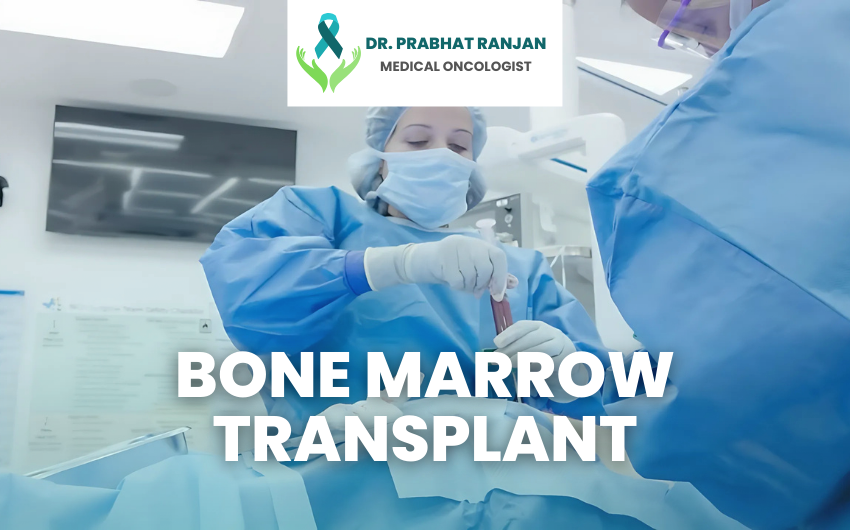
Bone Marrow
Understanding the Procedure and Its Importance
Your bone marrow is like a factory inside your bones — it works 24/7 to produce the blood cells that keep you alive and healthy. From carrying oxygen to fighting infections, your body relies on the steady supply of healthy blood cells created in the marrow. But when certain diseases or conditions affect the bone marrow, medical intervention becomes necessary.
At our centre, we offer expert bone marrow evaluation, treatment, and transplant services to help restore healthy blood cell production and improve quality of life.
What is Bone Marrow?
Bone marrow is the soft, spongy tissue found inside your larger bones such as the hip, thigh, and breastbone. It contains stem cells, which are responsible for producing:
- Red blood cells – carry oxygen throughout the body
- White blood cells – fight infections
- Platelets – help blood clot and prevent bleeding
When your bone marrow is healthy, these cells are produced in balanced amounts. However, illnesses like leukemia, aplastic anemia, thalassemia, lymphoma, and multiple myeloma can disrupt this process.
Bone Marrow Transplant – An Overview
A bone marrow transplant (BMT), also called a stem cell transplant, is a medical procedure that replaces damaged or diseased bone marrow with healthy stem cells. These healthy cells can come from your own body (autologous transplant) or from a donor (allogeneic transplant).
The goal of a bone marrow transplant is to restore the body’s ability to produce healthy blood cells and fight infections. This procedure can be life-saving for patients with severe blood disorders, cancers, or immune system diseases.
Types of Bone Marrow Transplants
- Autologous Transplant – Your own healthy stem cells are collected, stored, and reintroduced after high-dose chemotherapy or radiation.
- Allogeneic Transplant – Stem cells come from a matched donor, often a sibling or unrelated volunteer.
- Haploidentical Transplant – Stem cells from a partially matched donor (often a family member).
- Cord Blood Transplant – Stem cells collected from umbilical cord blood after birth.
How the Procedure Works
- Step 1: Preparation – Patient undergoes conditioning therapy (chemotherapy or radiation) to destroy diseased marrow.
- Step 2: Stem Cell Infusion – Healthy stem cells are given through an IV, much like a blood transfusion.
- Step 3: Recovery – The new stem cells travel to the bone marrow and start producing healthy blood cells.
Risks and Recovery
Like any medical procedure, bone marrow transplants carry risks such as infection, graft-versus-host disease (in allogeneic transplants), or side effects from chemotherapy. Recovery may take weeks to months, depending on the individual’s health and type of transplant.
Why Choose Us?
- Highly experienced hematologists and transplant specialists
- Advanced facilities for safe stem cell collection and transplantation
- Comprehensive pre- and post-transplant care
Compassionate, patient-centered approach