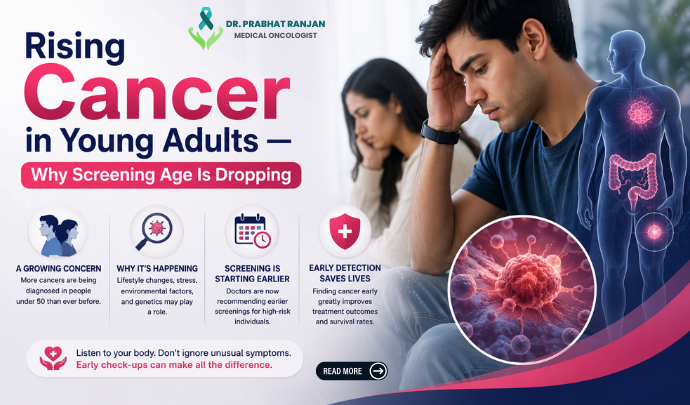
Rising Cancer in Young Adults — Why Screening Age Is Dropping
For decades, cancer was largely considered a disease of older age. That assumption is rapidly changing. Across the world, and increasingly in India, doctors are seeing a troubling rise in cancer diagnoses among people in their 20s, 30s, and early 40s. As the best oncologist in Greater Noida, Dr. Prabhat Ranjan has witnessed this shift firsthand — and it's reshaping how screening guidelines are being approached.
The Changing Face of Cancer
Cancers that were once rare in young adults — including colorectal, breast, and certain gastrointestinal cancers — are now being diagnosed at significantly younger ages. This isn't just anecdotal; global data trends confirm a steady rise in early-onset cancer cases over the past two decades. Consulting the best oncologist in Greater Noida has become increasingly important for young adults experiencing unexplained or persistent symptoms, rather than assuming cancer risk applies only to older individuals.
Why Is This Happening?
1. Lifestyle and Dietary Shifts
Increased consumption of processed foods, high sugar intake, sedentary routines, and reduced fiber intake have all been linked to rising cancer rates in younger populations.
2. Rising Obesity Rates
Obesity is a well-established risk factor for several cancers, including colorectal and breast cancer, and its prevalence among young adults has grown substantially.
3. Environmental and Chemical Exposure
Increased exposure to pollutants, processed packaging chemicals, and other environmental factors is being studied as a possible contributor to early-onset cancers.
4. Delayed Reproductive Patterns
Changes in reproductive timelines, including later pregnancies, have been associated with shifts in certain hormone-related cancer risks.
5. Genetic and Hereditary Factors
Some young-onset cancers are linked to inherited genetic mutations, making family history an increasingly important factor to discuss with the best oncologist in Greater Noida.
Why Screening Guidelines Are Shifting
Traditional screening age recommendations — such as starting colorectal cancer screening at 50 — were based on historical data from decades ago. With rising incidence rates among younger populations, several global health bodies have already lowered recommended screening ages, and Indian oncologists are increasingly advocating for similar proactive approaches.
The best oncologist in Greater Noida now recommends that young adults with relevant risk factors — family history, persistent symptoms, or genetic predisposition — should not wait until standard screening age to get evaluated.
Symptoms Young Adults Should Never Ignore
Because cancer isn't traditionally expected at a young age, many symptoms get dismissed or misattributed to stress, diet, or minor illness. Warning signs to watch for include:
Unexplained weight loss
Persistent fatigue that doesn't improve with rest
Changes in bowel habits or blood in stool
Unusual lumps or swelling
Persistent pain in a specific area
Unexplained bleeding
If any of these symptoms persist beyond a few weeks, consulting the best oncologist in Greater Noida for a proper evaluation is strongly advised.
The Role of Family History
A family history of cancer significantly increases individual risk, sometimes warranting earlier and more frequent screening. Dr. Prabhat Ranjan often emphasizes that young adults with a first-degree relative diagnosed with cancer should discuss personalized screening timelines rather than relying solely on general age-based guidelines.
Diagnostic Approach for Young Adults
When young patients present with concerning symptoms, the best oncologist in Greater Noida follows a thorough diagnostic pathway:
Detailed family and medical history review
Blood tests and tumor marker screening where relevant
Imaging studies such as ultrasound, CT, or MRI based on symptoms
Endoscopic or biopsy procedures for definitive diagnosis when indicated
Genetic counseling for patients with strong family history patterns
Why Early Detection Changes Outcomes
Cancer detected at an early stage is significantly more treatable, often with less aggressive intervention and better long-term outcomes. Delayed diagnosis, particularly common in younger patients who don't expect a cancer diagnosis, often results in more advanced disease at the time of detection. This is precisely why the best oncologist in Greater Noida advocates for awareness and proactive screening rather than waiting for symptoms to become severe.
Lifestyle Steps for Prevention
Maintain a balanced diet rich in fiber, fruits, and vegetables.
Limit processed and red meat consumption.
Stay physically active with regular exercise.
Avoid tobacco and limit alcohol consumption.
Maintain a healthy body weight.
Discuss family cancer history with your doctor early.
Conclusion
The rise of cancer among young adults is a wake-up call that challenges long-held assumptions about who is "at risk." As screening guidelines continue to evolve, awareness and early evaluation remain the most powerful tools against late-stage diagnosis. For young adults experiencing unexplained symptoms or carrying a significant family history, Dr. Prabhat Ranjan, recognized as the best oncologist in Greater Noida, offers thorough, personalized evaluation and care.
Don't wait for age-based guidelines alone — listen to your body and seek expert evaluation when something feels off.
FAQs
Q1. Why is cancer increasing among young adults?
Contributing factors include lifestyle changes, rising obesity, environmental exposures, dietary shifts, and in some cases, hereditary genetic factors.
Q2. At what age should young adults consider cancer screening?
This depends on individual risk factors like family history and symptoms. Those with relevant risk factors should consult an oncologist for a personalized screening plan rather than waiting for standard age guidelines.
Q3. Which cancers are becoming more common in younger people?
Colorectal, breast, and certain gastrointestinal cancers have shown a notable rise in incidence among younger populations globally.
Q4. Should I get screened early if I have a family history of cancer?
Yes, a family history of cancer, especially in first-degree relatives, is a strong reason to discuss earlier and more frequent screening with an oncologist.


.png)


.png)



.png)



.png)
.png)
.png)

.png)
.png)
.png)
.png)
.png)
.png)
.png)
.png)
.png)
.png)
.png)
.png)
.png)
.png)
.png)
.png)
.png)