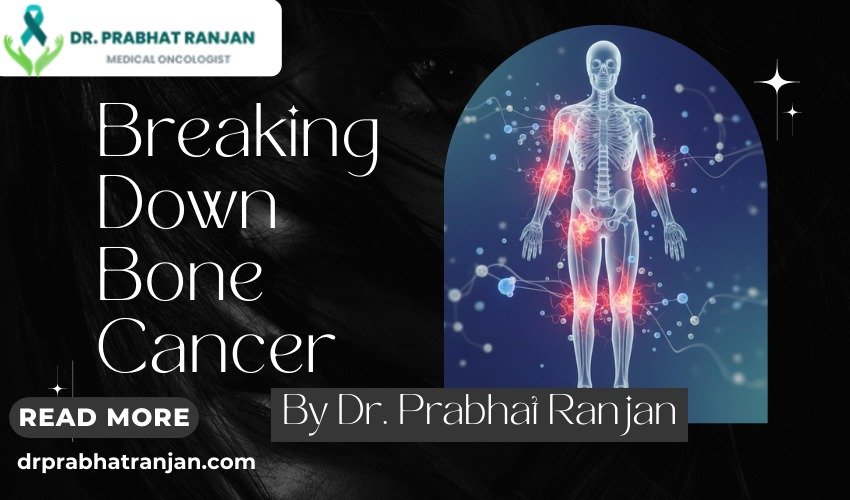
Breaking Down Bone Cancer
Bone cancer is a rare but serious condition that begins in the bones and can significantly impact a person’s mobility, strength, and overall health. Because symptoms often resemble common orthopedic issues, many patients delay evaluation. Early diagnosis and timely treatment remain the most effective ways to improve outcomes. As the best medical oncologist in Greater Noida, Dr. Prabhat Ranjan is committed to providing clear information and scientific guidance to help patients understand this disease better.
This blog breaks down the fundamentals of bone cancer in an educational and easy-to-understand format.
What Is Bone Cancer?
Bone cancer occurs when abnormal cells in the bone grow uncontrollably. It can be classified into two major categories:
Primary Bone Cancer
This type originates in the bone itself. Common types include:
● Osteosarcoma: Most common in children and young adults; often affects long bones like the legs and arms.
● Chondrosarcoma: Begins in cartilage and is more common in adults.
● Ewing Sarcoma: Often affects children and teenagers and may occur in bones or surrounding soft tissues.
Secondary Bone Cancer
This occurs when cancer from another part of the body spreads to the bone, such as from the breast, prostate, or lung.
Early evaluation by the best medical oncologist in Greater Noida helps distinguish between primary and secondary bone cancer, which is crucial for selecting the right treatment approach.
What Causes Bone Cancer?
The exact cause of bone cancer is not fully known, but certain risk factors may increase the chances of developing it.
Risk Factors May Include:
● Genetic mutations
● Family history of cancers
● Previous radiation therapy
● Paget’s disease of the bone
● Rapid bone growth during adolescence
A detailed medical assessment by the best medical oncologist in Greater Noida can help identify underlying risks and guide appropriate screening.
Symptoms of Bone Cancer
Bone cancer often presents with symptoms that worsen over time. The most common signs include:
● Persistent bone pain, especially at night
● Swelling or a noticeable lump over a bone
● Reduced joint movement
● Fatigue or unexplained weight loss
● Weak bones leading to fractures
If pain continues for weeks without improvement, early consultation is highly recommended.
How Is Bone Cancer Diagnosed?
Correct diagnosis is critical, and several tests may be used to determine the type and stage of cancer.
1. Physical Examination
A detailed assessment to evaluate pain, swelling, and mobility.
2. Imaging Tests
● X-ray
● MRI
● CT scan
● PET scan
These help identify tumor location, size, and potential spread.
A tissue sample is taken from the bone to confirm cancer.
Accurate biopsy technique is essential and best performed under the guidance of an experienced specialist such as the best medical oncologist in Greater Noida.
Treatment varies depending on the cancer type, size, location, and whether it has spread.
Used to shrink tumors and destroy cancer cells. Most effective for osteosarcoma and Ewing sarcoma.
2. Surgery
Surgical removal of the tumor may be required. Advancements in surgical techniques often make limb-sparing surgery possible.
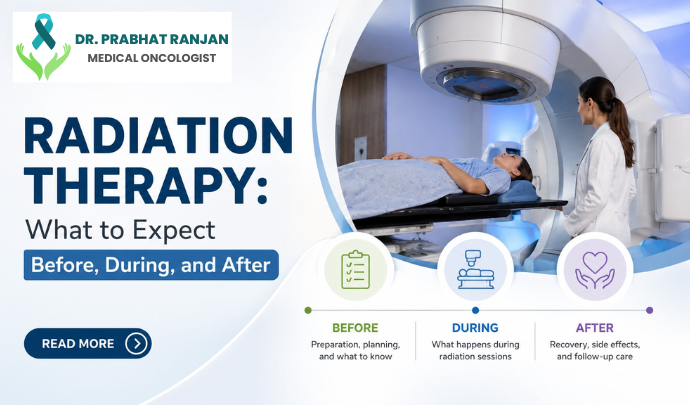
3. Radiation Therapy
High-energy beams are used to destroy cancer cells. Often effective for Ewing sarcoma and for pain relief in advanced cases.
4. Targeted Therapy and Immunotherapy
In select cases, modern therapies may be recommended depending on the tumor’s genetic markers.
A personalized treatment plan offered by the best medical oncologist in Greater Noida ensures an approach tailored to each patient’s needs, improving both survival and quality of life.
Prognosis and Survival
The prognosis for bone cancer depends on:
● Type of bone cancer
● Stage at diagnosis
● Response to treatment
● Age and overall health
When diagnosed early and managed properly, many patients achieve positive outcomes. Continuous follow-up is essential.
Living With and Beyond Bone Cancer
Patients may experience physical and emotional challenges throughout treatment. Rehabilitation, physiotherapy, balanced nutrition, and psychological support all contribute to long-term recovery.
Comprehensive care provided by the best medical oncologist in Greater Noida ensures that patients receive ongoing support even after completing active treatment.
FAQs
(SEO-Friendly)
1. What are the early symptoms of bone cancer?
Persistent bone pain, swelling, or unexplained fractures are common early symptoms. Medical evaluation is important if symptoms continue.
2. Is bone cancer curable?
Many cases of bone cancer are treatable and even curable, especially when diagnosed early and treated with a multidisciplinary approach.
3. How is bone cancer different from bone metastasis?
Primary bone cancer starts in the bone, while bone metastasis spreads from another organ. Treatment varies for each type.
4. Which doctor should I consult for bone cancer treatment?
A medical oncologist with experience in bone tumors is the best choice. Many patients choose the best medical oncologist in Greater Noida for expert evaluation and treatment.
5. Does bone cancer always require surgery?
Not always. Some cases are managed with chemotherapy, radiation therapy, or targeted therapies depending on cancer type.
6. How long does bone cancer treatment last?
Treatment duration varies, ranging from weeks to several months, depending on cancer type and response.


.png)

.png)


.png)


.png)
.png)
.png)

.png)
.png)
.png)
.png)
.png)
.png)
.png)
.png)
.png)
.png)
.png)
.png)
.png)
.png)



.png)
.png)
.png)