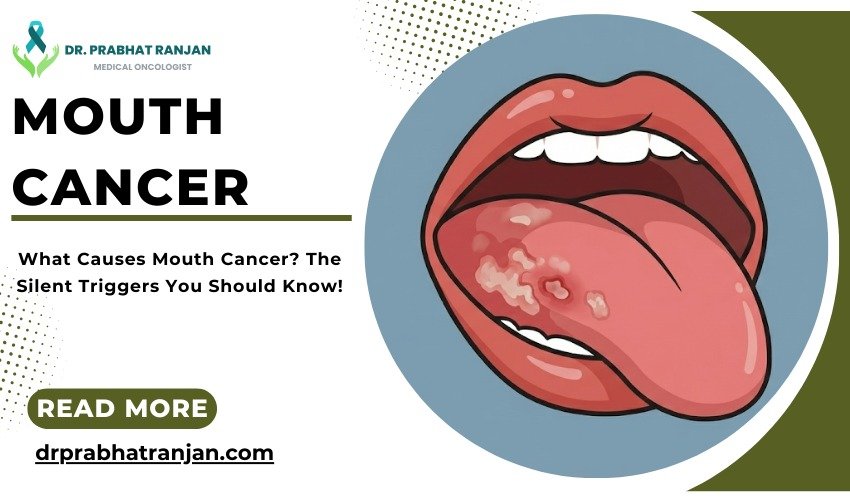
What Causes Mouth Cancer? The Silent Triggers You Should Know!
Mouth cancer, also known as oral cancer, is a serious and often underestimated health condition that affects thousands of people every year. Despite being highly preventable and treatable when detected early, mouth cancer frequently goes unnoticed until it reaches advanced stages. As a Medical Oncologist, Dr. Prabhat Ranjan strongly emphasizes awareness, early detection, and understanding the hidden causes behind this disease.
This blog aims to educate patients and caregivers about what causes mouth cancer, its silent triggers, and how early lifestyle changes and timely medical consultation can save lives.
Mouth cancer develops in any part of the oral cavity, including the lips, tongue, cheeks, gums, floor of the mouth, and roof of the mouth. It usually begins as a small, painless lesion that many people ignore, assuming it to be harmless. Over time, these lesions can turn cancerous.
Both men and women are affected by mouth cancer, and surprisingly, younger individuals are now being diagnosed due to changing lifestyle habits. Regular health checkups—just like women consult the best medical oncologist Greater Noida for reproductive health—are equally important for oral and cancer screening.
Major Causes of Mouth Cancer
1. Tobacco Use (Smoking and Chewing)
The leading cause of mouth cancer is tobacco consumption in any form—cigarettes, bidis, cigars, gutkha, pan masala, and khaini. Tobacco contains carcinogenic substances that damage the DNA of oral cells, leading to cancer.
Even smokeless tobacco significantly increases risk. Many people mistakenly believe it to be safer, which is not true.
2. Excessive Alcohol Consumption
Alcohol acts as an irritant to the lining of the mouth. When combined with tobacco, the risk of mouth cancer multiplies several times. Alcohol allows harmful chemicals from tobacco to penetrate oral tissues more easily, accelerating cancer development.
3. Human Papillomavirus (HPV) Infection
HPV, especially HPV-16, is emerging as a silent trigger for mouth and throat cancers. This infection spreads through oral contact and often remains asymptomatic for years. Awareness about HPV is increasing, similar to how women are educated by the best medical oncologist Greater Noida about HPV and cervical cancer prevention.
4. Poor Oral Hygiene
Neglecting oral hygiene can lead to chronic infections, gum disease, and prolonged inflammation, creating an environment favorable for cancer development. Ill-fitting dentures, broken teeth, or sharp dental edges can also cause repeated trauma to oral tissues.
5. Nutritional Deficiencies
A diet lacking in fruits, vegetables, and essential vitamins (especially Vitamin A, C, and E) weakens the body’s natural defense against cancer. Antioxidants found in fresh produce help repair damaged cells and prevent abnormal growth.
Just as balanced nutrition is emphasized by the best medical oncologist Greater Noida during pregnancy and women’s health care, it plays a crucial role in cancer prevention as well.
6. Prolonged Sun Exposure
Cancer of the lips is often caused by excessive exposure to sunlight, especially in individuals working outdoors. UV radiation damages skin cells over time, increasing cancer risk.
7. Genetic and Immune Factors
Some individuals may have a genetic predisposition to cancer or weakened immunity due to chronic illness, medications, or treatments. A compromised immune system cannot effectively fight abnormal cell growth.
Early Warning Signs You Should Never Ignore
Early detection is key to successful treatment. Consult a cancer specialist like Dr. Prabhat Ranjan if you notice:
● Non-healing mouth ulcers lasting more than 2 weeks
● Red or white patches inside the mouth
● Difficulty chewing or swallowing
● Persistent sore throat or hoarseness
● Unexplained bleeding or numbness
● Swelling or lump in the mouth or neck
Routine health screenings—similar to annual checkups recommended by the best medical oncologist Greater Noida—can help detect problems before they become life-threatening.
How Mouth Cancer Is Diagnosed
Diagnosis involves a thorough oral examination, biopsy of suspicious lesions, imaging tests (CT/MRI/PET scans), and blood investigations. Early-stage mouth cancer has a high survival rate when treated promptly.
Prevention: Small Changes, Big Impact
● Quit tobacco and limit alcohol
● Maintain excellent oral hygiene
● Eat a nutrient-rich diet
● Protect lips from sun exposure
● Get regular dental and medical checkups
● Seek expert care for persistent symptoms
Just as women rely on the best medical oncologist Greater Noida for preventive care, consulting an experienced oncologist for early symptoms can make a significant difference.
With extensive experience in cancer diagnosis and treatment, Dr. Prabhat Ranjan provides evidence-based, compassionate, and personalized oncology care. His approach focuses on early detection, patient education, and advanced treatment strategies to improve outcomes and quality of life.
Conclusion
Mouth cancer often develops silently, but its triggers are largely preventable. Awareness, lifestyle modification, and early medical intervention are the strongest weapons against this disease. If you or your loved ones experience persistent oral symptoms, do not ignore them.
Preventive healthcare—whether through cancer screening or regular visits to specialists like the best medical oncologist Greater Noida —plays a vital role in long-term health and survival.
FAQs
Q1. What is the main cause of mouth cancer?
Tobacco use, including smoking and chewing, is the most common cause of mouth cancer, followed by alcohol consumption.
Q2. Can mouth cancer occur without tobacco use?
Yes, infections like HPV, poor oral hygiene, nutritional deficiencies, and genetic factors can also cause mouth cancer.
Q3. Is mouth cancer curable?
Yes, when detected early, mouth cancer is highly treatable with a good survival rate.
Q4. Who is at higher risk of mouth cancer?
People who use tobacco or alcohol, have HPV infection, poor oral hygiene, or weakened immunity are at higher risk.
Q5. When should I consult an oncologist for mouth problems?
If mouth ulcers, patches, or pain persist for more than two weeks, consult a cancer specialist immediately.
Q6. How is mouth cancer diagnosed?
It is diagnosed through clinical examination, biopsy, and imaging tests like CT or MRI scans.
Q7. Can lifestyle changes prevent mouth cancer?
Yes, quitting tobacco, eating a healthy diet, maintaining oral hygiene, and regular checkups can significantly reduce risk.


.png)



.png)



.png)



.png)
.png)
.png)

.png)
.png)
.png)
.png)
.png)
.png)
.png)
.png)
.png)
.png)
.png)
.png)
.png)
.png)




.png)
.png)
.png)